
Current Issue
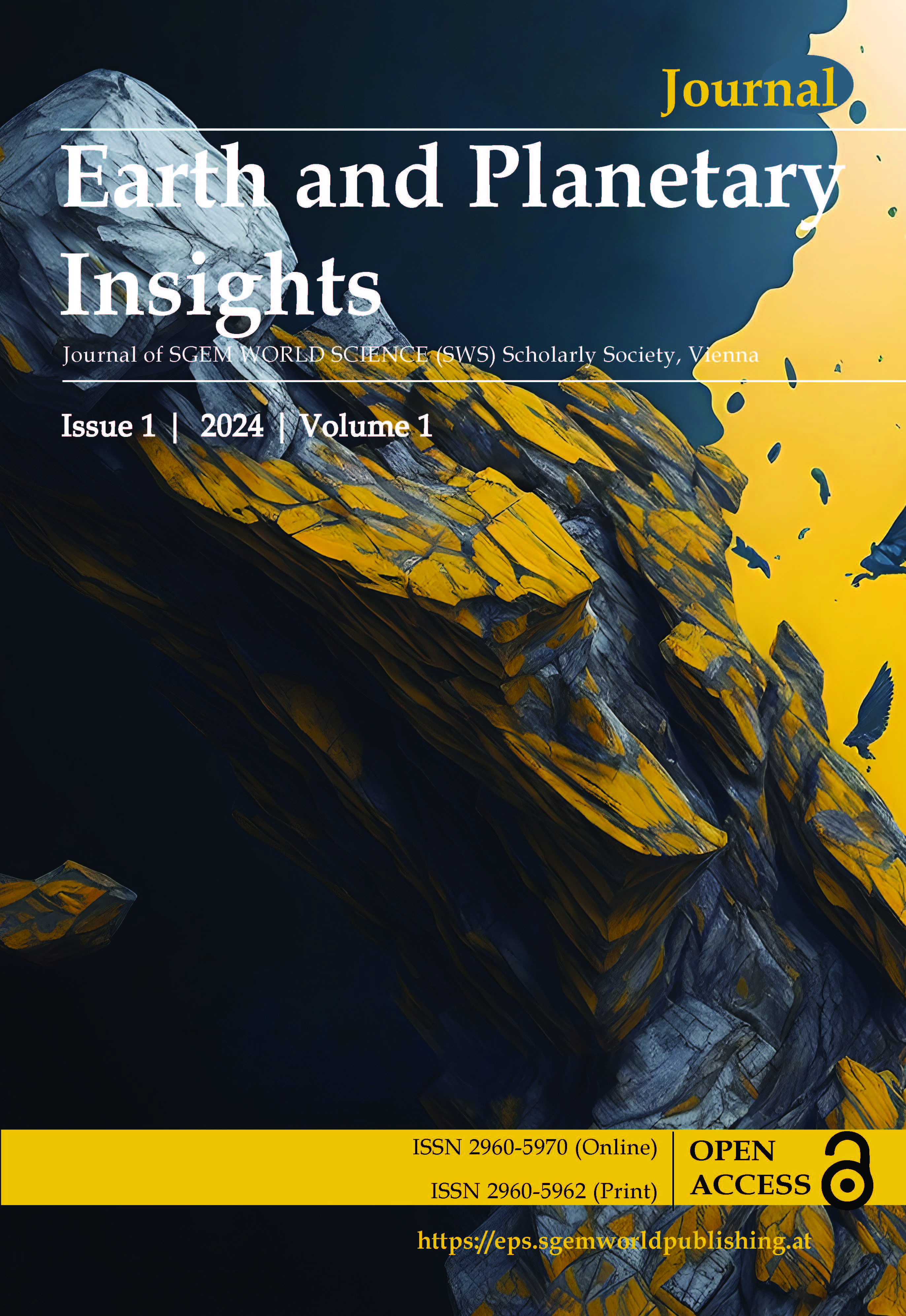
Dear Readers,
It is with great pride and enthusiasm that we present to you the inaugural issue of Earth and Planetary Insights. This journal emerges at a critical juncture in our history, where the study of Earth and planetary sciences is more vital than ever. As we face unprecedented environmental challenges and explore new frontiers in space, the insights and innovations presented in this journal will play a crucial role in shaping our future.
Our planet is undergoing rapid changes due to climate shifts, resource depletion, and technological advancements. At the same time, humanity's aspirations to explore and settle other celestial bodies are becoming more tangible. In this dynamic landscape, Earth and Planetary Insights aims to be a beacon of knowledge, fostering interdisciplinary research and facilitating the exchange of ideas that can lead to sustainable solutions and groundbreaking discoveries.
The United Nations Sustainable Development Goals (SDGs) serve as a blueprint for addressing global challenges and achieving a better and more sustainable future for all. Earth and planetary sciences are intrinsically linked to many of these goals, particularly those focused on climate action (SDG 13), life below water (SDG 14), life on land (SDG 15), clean water and sanitation (SDG 6), and affordable and clean energy (SDG 7). By advancing our understanding of the Earth’s systems and exploring sustainable resource utilization, we contribute directly to these global objectives.
In this first issue, we are thrilled to feature a diverse array of articles that address some of the most pressing issues in the fields of Earth and planetary sciences. These articles reflect the journal's commitment to advancing scientific understanding and promoting innovative approaches to complex problems.
We begin with a comprehensive exploration by myself, Prof. Ildiko Tulbure. My article, "Earth and Planetary Insights for Human Sustainability," emphasizes the importance of integrating Earth and planetary insights across various scientific fields. I discuss how exploration, analysis, and assessment can address human sustainability challenges through inter-, multi-, and transdisciplinary approaches. The interconnectedness of environmental elements, the impact of human activities, and the potential of modern management tools and space technologies in ensuring a sustainable future are highlighted. This research sets the stage for the issue by establishing the foundational themes and interdisciplinary approaches that are critical for advancing our understanding of sustainability. As Editor-in-Chief, I felt it was important to begin our inaugural issue with this article to underscore the holistic vision and collaborative efforts needed to address the complex challenges facing our world today.
Following this, we delve into the potential of in-situ resource utilization on the Moon. The article "Concentration of Lunar Plagioclase for Solar Cells Fabrication: An ISRU Conceptual Architecture" by Gustavo Jamanca-Lino explores the feasibility of using lunar regolith to produce essential materials for solar panels. This research presents a detailed conceptual framework for the extraction and processing of plagioclase, highlighting its potential to reduce the reliance on Earth-based resources for lunar operations. This study is aligned with SDG 7 (Affordable and Clean Energy) by exploring innovative ways to harness renewable energy sources in extraterrestrial environments.
Next, we turn our attention to the field of enhanced oil recovery with the article "Surfactant–Polymer Flooding: Geochemical Monitoring of Formation Fluid Properties" by Maria Shipaeva and colleagues. This study introduces a novel method for monitoring the geochemical properties of formation fluids during surfactant–polymer flooding. Through high-precision mass spectrometry, the research tracks the changes in oil and water properties, offering valuable insights into the effectiveness of chemical flooding techniques and their impact on reservoir performance. This research supports SDG 6 (Clean Water and Sanitation) and SDG 13 (Climate Action) by promoting more efficient and sustainable extraction methods.
The issue continues with a focus on sustainability in manufacturing. The article "Carbon Footprint Reduction in Manufacturing SMEs through Digital Technologies" by Agostinho da Silva and Antonio Cardoso examines the impact of digital transformation on the ecological footprint of small and medium-sized enterprises in the Portuguese Ornamental Stone sector. The findings demonstrate that investments in digital technologies can lead to significant reductions in CO2 emissions, underscoring the critical role of digital innovation in promoting environmental sustainability. This study directly contributes to SDG 9 (Industry, Innovation, and Infrastructure) and SDG 13 (Climate Action) by illustrating the benefits of integrating digital technologies to enhance environmental performance.
Finally, we present an insightful study on the challenges faced by higher education institutions in promoting sustainable practices. The article "Overcoming Obstacles: Higher Education Institutions and the SDGs in the EU – A Cluster Analysis" by Marina Albanese and her team utilizes hierarchical cluster analysis to classify European universities based on the financial and knowledge barriers they encounter. This research provides valuable insights into the diverse challenges and needs of higher education institutions, offering guidance for policymakers and university leaders to develop effective strategies for advancing the Sustainable Development Goals. This article is especially relevant to SDG 4 (Quality Education) and SDG 17 (Partnerships for the Goals), highlighting the importance of education and collaboration in achieving sustainability.
As you explore the articles in this inaugural issue, we hope you are inspired by the depth of research and the innovative solutions presented. Earth and Planetary Insights is dedicated to fostering a global community of scholars, researchers, and practitioners committed to addressing the critical issues of our time. We invite you to join us on this journey of discovery and collaboration.
Thank you for your support and engagement. Together, we can make a significant impact on our understanding of Earth and the cosmos, driving forward the frontiers of science and sustainability.
Warm regards,
Prof. Dr. Ildiko Tulbure
Editor-in-Chief, Earth and Planetary Insights (EPI)
NANO, BIO, GREEN, AND SPACE TECHNOLOGIES FOR A SUSTAINABLE FUTURE
GEOLOGY, EXPLORATION, AND SUSTAINABLE MINING
ECOLOGY, ENVIRONMENTAL ECONOMICS, EDUCATION, AND LEGISLATION
